It is tempting to skip the plan. Point at the yard, describe what you want, and let the work begin. Then the questions start. Where exactly does the patio end? What happens to drainage once the grade changes? Why does the quote keep growing?
A landscape design plan answers these questions before a single shovel hits the ground. Here is why that saves you, in real dollars and real time.
1. A plan is designed around your life, not just your lot
A good landscape design starts with how you actually live. Morning coffee outside. Kids and a dog who need open ground. Weekend dinners for ten. Quiet space after a long day.
When your landscape is planned around your routine, you use it. When it is not, you end up with a beautiful patio in the wrong corner and a lawn nobody touches. Design is not decoration. It is your daily life, drawn to scale.
2. A plan locks in your vision and your budget together
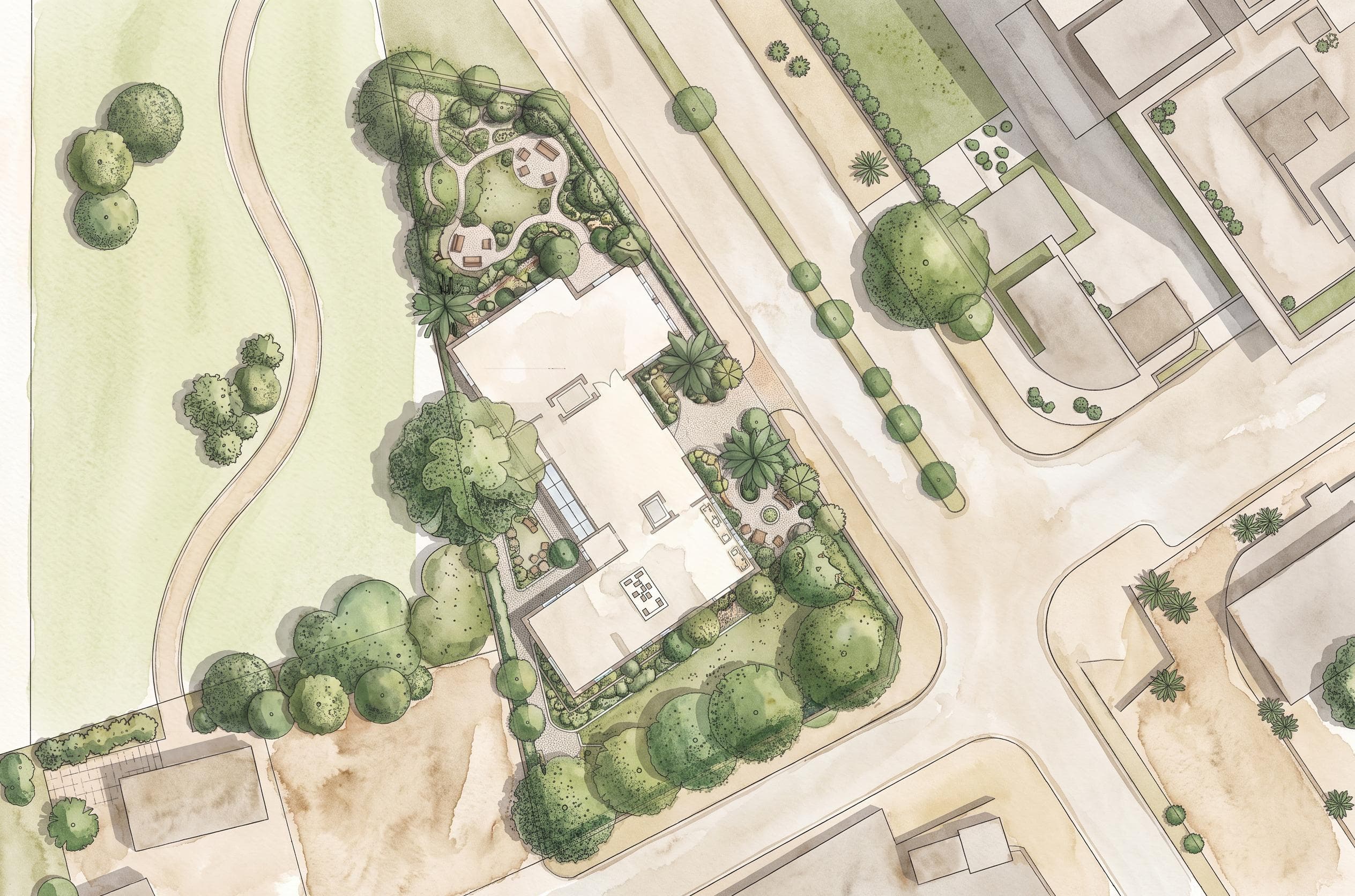
Without a plan, you are assuming what will be built. With a plan, you know. A finalized design puts everything on paper: materials, dimensions, planting, features. That means your contractor can price the actual project, not a rough guess. You see the cost before construction starts, and you can adjust the design while changes are still free.
Changing a line on a drawing costs nothing. Changing a built retaining wall costs thousands. The plan is where you make your expensive decisions cheaply.
3. A plan is the master keeper of construction details
Grades, setbacks, drainage, utilities, material specs, plant placement. A thoughtful landscape design plan holds all of it in one document.
On site, that means fewer stalled days, fewer "let me call you back" moments, and fewer decisions made under pressure. Crews can build from the drawing instead of improvising. Execution moves faster because the thinking has already been done. Time saved during construction is money saved. Every time.
4. A plan optimizes the space you already have
Most yards are not too small. They are underplanned. A design plan looks at your entire property and works out how to fit what you need into what you own. Circulation, sightlines, sun and shade, privacy, storage. Often the answer is not more space. It is better use of the space that is already there. You get exactly what you need, without buying an inch more land.
5. A plan prevents the most expensive mistake: doing it twice
Redoing landscape work is brutal. Tearing out a poorly placed walkway, moving an interlock patio, replacing plants that failed in the wrong exposure. These are full-price do-overs.
A design plan catches these problems on paper. The right plant in the right place. The patio positioned for sun, not guesswork. Drainage resolved before it becomes a basement problem.
6. A plan protects your property value
Landscaping consistently ranks among the highest-return improvements a homeowner can make. But only cohesive, well-executed landscaping. A patchwork of disconnected projects rarely adds the same value.
A plan gives your property one clear design language, even if you build it in phases over several years. Phase one and phase five still look like they belong together.
The real cost of skipping the plan
Skipping design feels like saving money. In practice, you pay for it in change orders, delays, rework, and a finished landscape that never quite fits your life.
A landscape design plan typically costs a small fraction of the total project. It is the cheapest insurance you will ever buy for the most expensive outdoor investment you will ever make.